|
The construction
of the Convent of San Francisco, together with its Temple, was begun
in 1567 and was completed in a very short time. In December, 1647,
the temple burned down and then was quickly rebuilt.
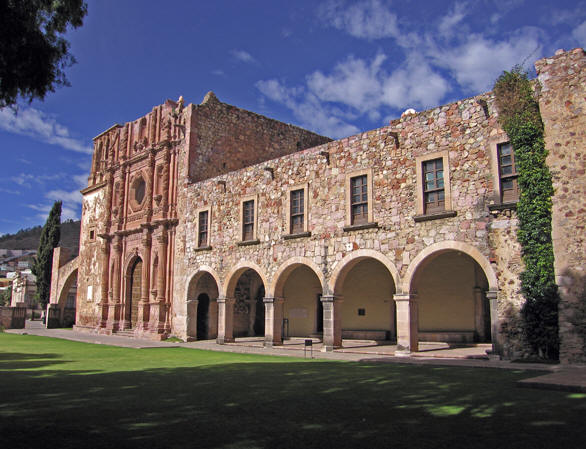
Religious
missionaries were commissioned to evangelize northern New Spain and
other territories that today form part of the southern United
States. At this time in history, this area of what is now the U.S.
was known to people living in Zacatecas as the 'Civilized North.'
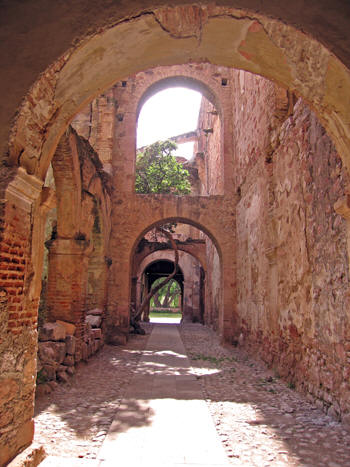
Archway after
archway in the long entranceway of the Convent.
Following the Law
on Nationalization of church property during the Mexican Reforma,
religious orders were told to leave their convents and monasteries.
The Franciscans who lived here totally abandoned this Convent,
resulting in the neglect of the building, all of its artistic and
religious artifacts, properties and gardens.
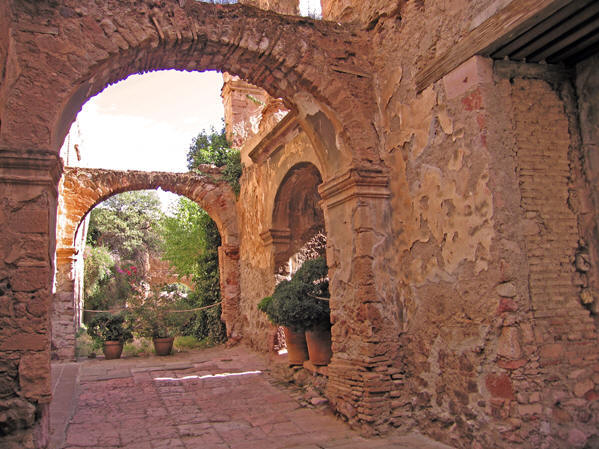
Local residents
of the area watched the exit of the Franciscans and promptly moved
in. Creating their own communities, materials from the walls and
ceilings were sold off or used for their own purposes, accelerating
the decline of these buildings. Obviously, no repairs were made to
the structures during this time.
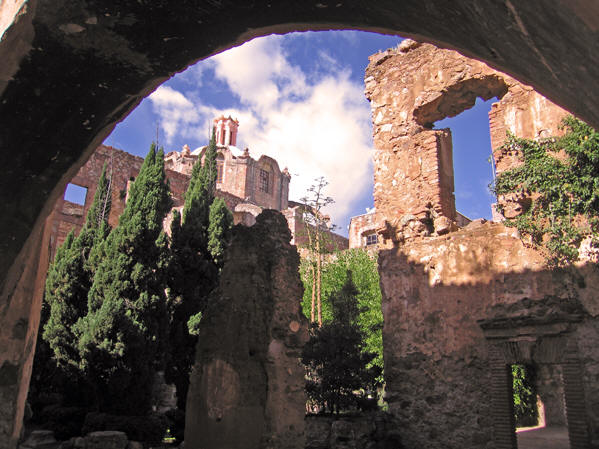
The Ex-Convento
continued to deteriorate for almost a century.
Even though in
the 1950's there was an effort to repair the old structure before it
was completely destroyed, it wasn't until the 1980's that the
situation was taken seriously. Famous artist Rafael Coronel offered
his vast collection of Mexican masks to be on display in the Templo,
exciting the restoration movement.
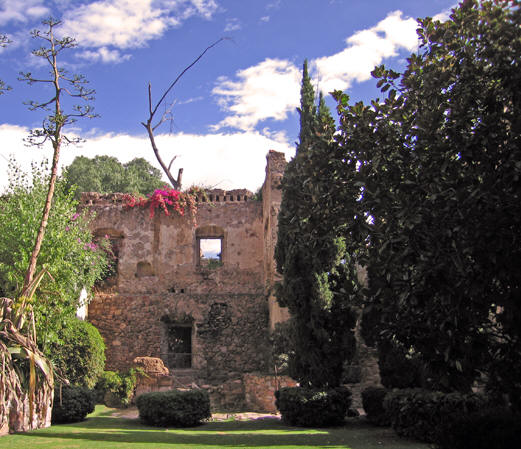
Those in charge
of the restoration kept a sense of the ruins at the same time
animating a view of what life must have been like during the
previous decades when this Convent was thriving.
Well manicured
gardens accentuate the remaining parts of the structure, and a quiet
respect is returned.
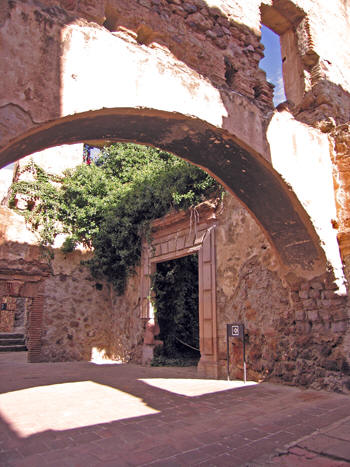
It's easy to
imagine friars wandering around these hallways, through arches and
doors. Perhaps they were praying, whispering, contemplating,
planning the next religious conversion of geographical areas to the
north.
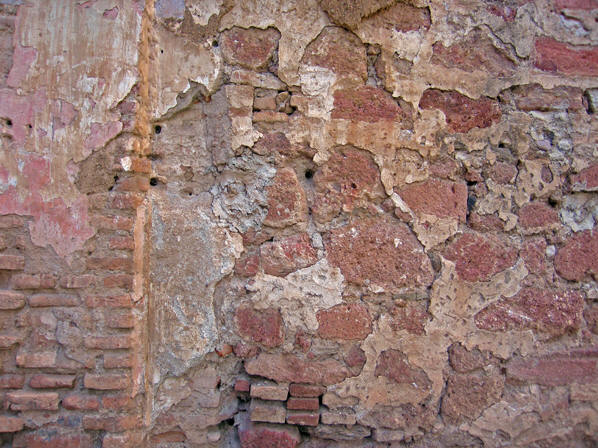
I enjoy viewing
the walls and sub-walls to see the construction design. People spend
a great deal of money trying to copy the look of ruins, and this is
the real thing!
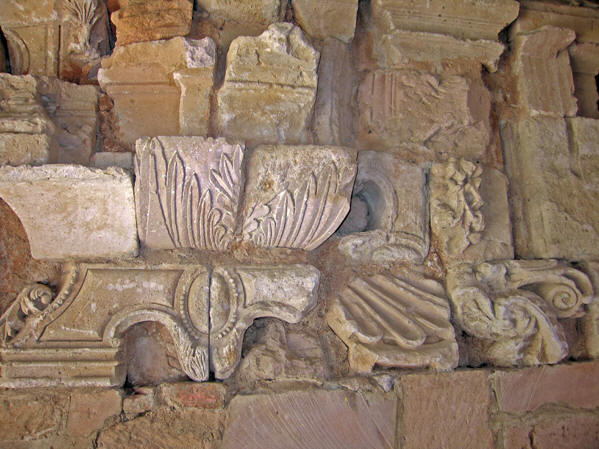
Not all the
portions were used or put back in their original locations in the
restoration process. Here you see an assemblage of the decorative
stone pieces used on walls, over doorways or elsewhere in the
Convent.
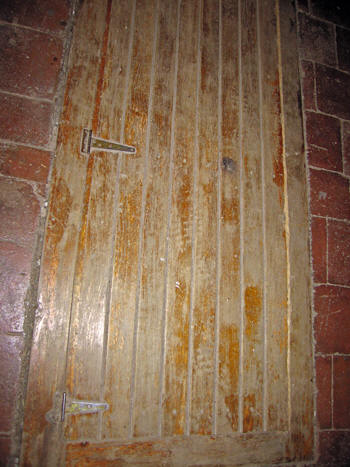
In the Templo
itself, which was in continued use until after the Revolution, I
tripped over this trap door on the floor. I was so busy looking up
at the vanished ceiling that I neglected to watch where I was
stepping.
Mystery!
Intrigue! Where did this trapdoor lead? What was under it?
I so much wanted
to open it up to find out, but the guard gave me a disapproving look
that stopped me in my tracks.
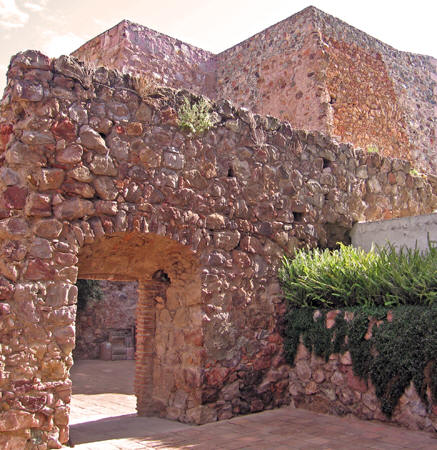
Beautiful
stonework, thick walls, tiny doorways.
The day's weather
was perfect and the shadows and light were mesmerizing to my eye.
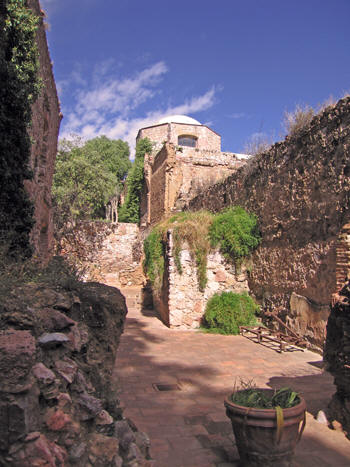
Every turn
brought a whole new surprise.
It is easy to
become engrossed in the layers of history and humanity of this
Ex-Convento.
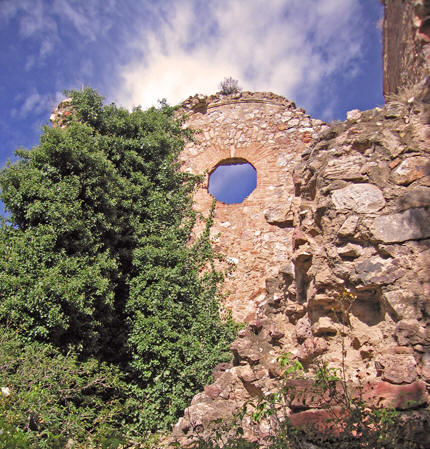
I wondered who
and how many times someone must have peered through this opening in
the wall.
Heretical as it
must sound, wouldn't you love to have something like this in your
own garden at home?
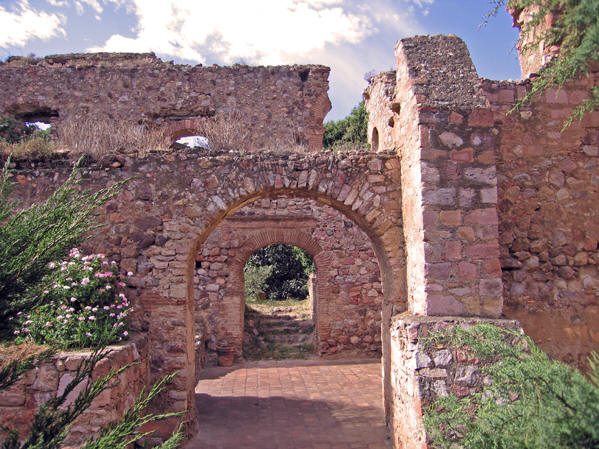
More echoes of
archways.
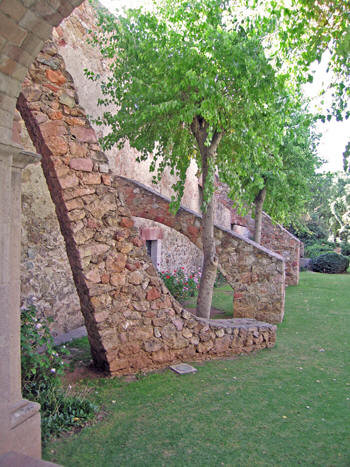
These are flying
buttresses used to help counter the stress of the building's
structure. With this support, flying buttresses allow the walls
themselves to be thinner, creating a more open, airy interior. It's
a design you will recognize on cathedrals built during this time
period all over the world.
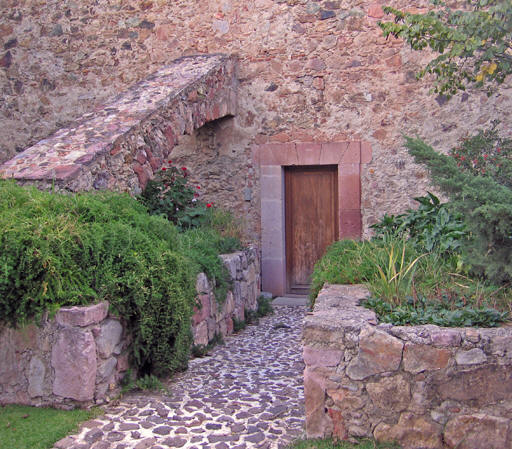
What is it about
closed doors that creates such intrigue?
This short,
narrow door leads to a room where one of the friars lived all those
years ago. I imagined the inside to be very simple living quarters.
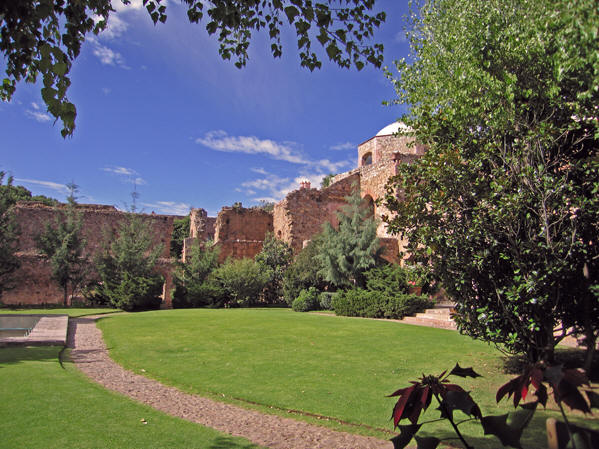
This is the back
side of the Ex-Convento. Personal rooms and hallways opened up to
this wide open space.
My fantasy
returns!
To be able to
experience such placid, unhurried surroundings with people of like
mind... There would be no controversy, right? Everyone having the
same tenets, the same goals! Uh... or maybe I would simply
prefer a hotel room.
***
Hours of
operation
Open Thursdays
through Tuesdays, 10 a.m. to 2 p.m., 4 p.m. to 7 p.m.
Sundays,
closed at 5 p.m.
|